
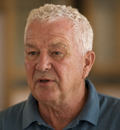
Interview with WILLIAM “BILL” MOONEY, POLARIS, in collaboration with STRYDE
When Bill Mooney first entered the seismic industry in the early 1980s, the concept of executing lightweight, wireless, high-density 3D surveys would have seemed like a notion straight out of science fiction. He recalls, “Back then, we were scratching our heads trying to figure out how to do a square-mile 3D with cable systems. Each receiver weighed 25 pounds, and we needed six or seven trucks and dozens of people to transport them.”
Fast forward four decades, and Mooney continues to push the envelope in seismic acquisition, but now with tools that weigh less than a baseball.
Polaris, founded in 1996, holds the title of Canada’s oldest seismic company. Under Mooney’s leadership, the team has completed over 1,200 projects globally, including 700 3D surveys and has played a pivotal role in several frontier basin discoveries, such as Namibia’s Kavango Basin and Zimbabwe’s Cabora Bassa Basin.
From the Arctic to Africa, Mooney and his team have earned a reputation steeped in technical excellence, operational efficiency, and a commitment to local communities. “Client success is the key to our survival,” he asserts. “If our clients succeed in their exploration, they’ll return with the same team. Just as importantly, we ensure the communities we work in benefit as well. If local people support you, the project goes smoothly, and you’re welcomed back.”
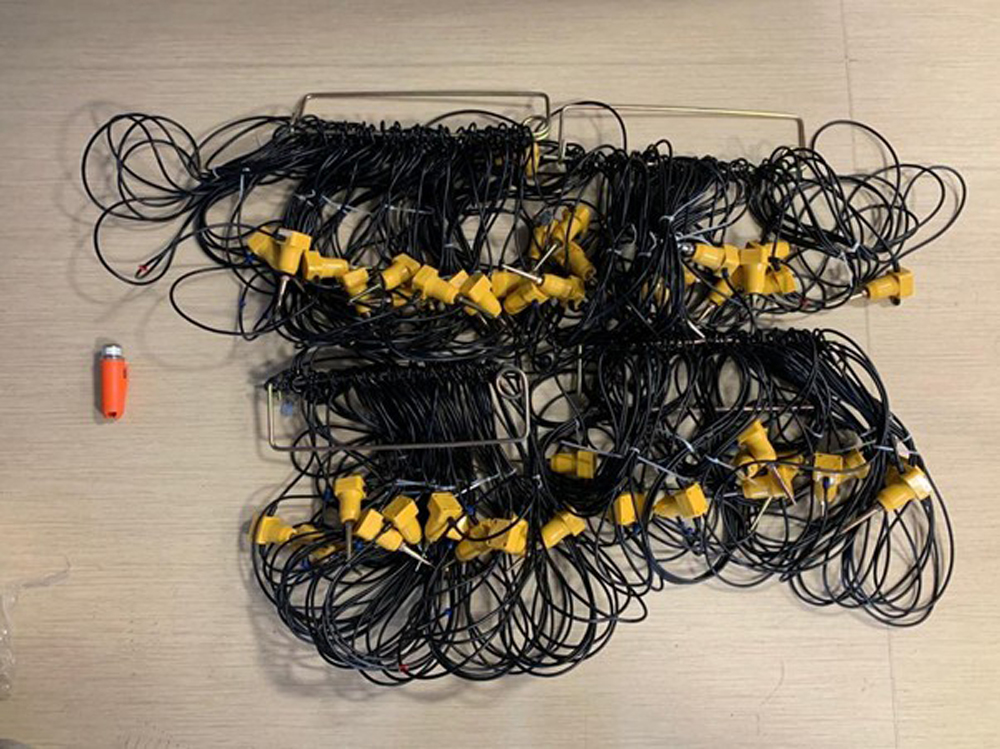
Fig. 1. STRYDE node, compared with cabled geophones.
THE SHIFT TO LIGHTWEIGHT NODAL SEISMIC
This community-first philosophy has guided Polaris through decades of technological advancements, evolving from analogue cables to autonomous nodes. However, the game changer arrived with STRYDE—the world’s smallest, lightest, and most affordable seismic node—when they joined forces in 2021.
“We’d witnessed many wireless systems come and go,” recalls Mooney. “These often came with multiple components and complicated communication networks. However, when STRYDE was introduced to us by an oil and gas operator client, we thought we might see the same issues again. But upon discovering that major operators were behind its development, we decided to give it a serious evaluation. Once we deployed it in the field, we were sold.”
STRYDE’s technology enables the collection of high-density seismic data using fewer field personnel, shorter timelines, and reduced overall costs compared to traditional methods. Designed for deployment in challenging environments, it also helps minimize health, safety, security, and environmental (HSSE) risks.
In collaboration with Getech, STRYDE also offers end-to-end exploration support, streamlining the transition from data acquisition to insight, thus aiding exploration teams in operating more efficiently and confidently.
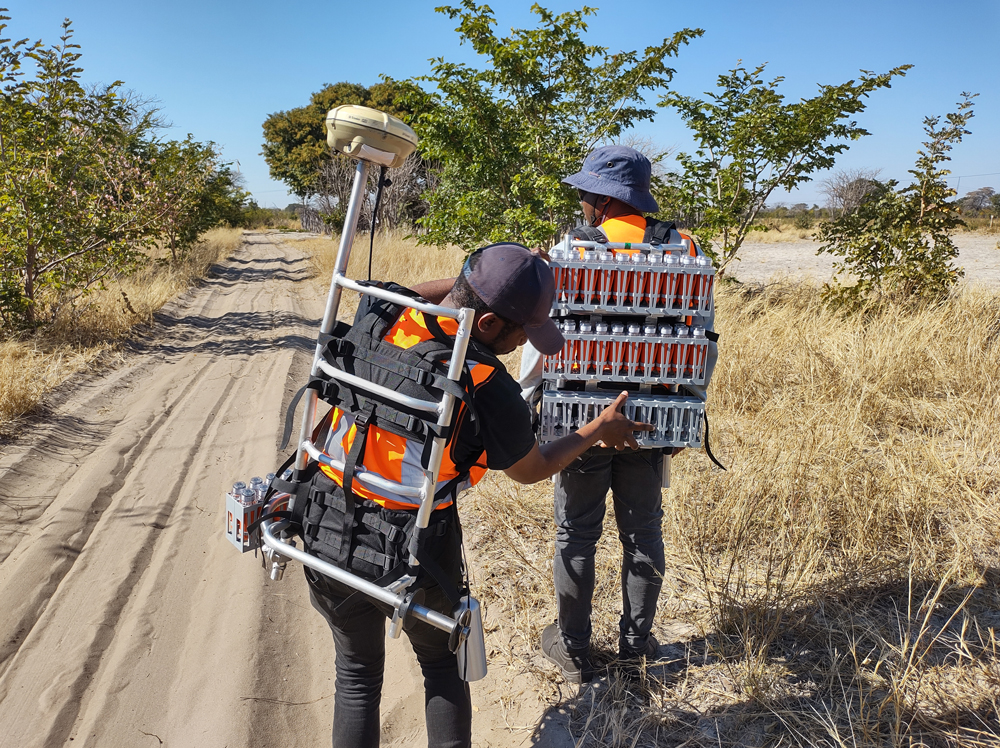
Fig. 2. STRYDE deployment in Namibia.
For Mooney, the most significant transformation has been the simplicity of the system. STRYDE’s single-unit design eliminates the headaches associated with traditional systems, such as cables and bulky batteries. “It’s about as close as you can get to making every design option feasible,” he explains. “This allows our geophysicists to focus on data quality rather than managing hardware.”
IMPROVING FIELD EFFICIENCY AND EXECUTION
This simplicity directly correlates to predictability and performance in field operations. “In seismic, everything is about repetition—thousands of movements, each timed to the second,” says Mooney. “By eradicating delays, we reduce costs and risks. With STRYDE, we can design our day down to the minutes and know exactly how we will perform.”
The operational advantages afforded by STRYDE align with Polaris’ mission to make seismic exploration low-impact and beneficial to local communities. In regions like East and West Africa, their projects deliver seismic data alongside remarkable community uplift.
COMMUNITY ENGAGEMENT IN FRONTIER OPERATIONS
Polaris operates with a minimum of 85% local content in its projects, often sourcing everything, from food to personnel, from nearby villages. Rather than merely procuring goods and labor, the company actively builds capacity.
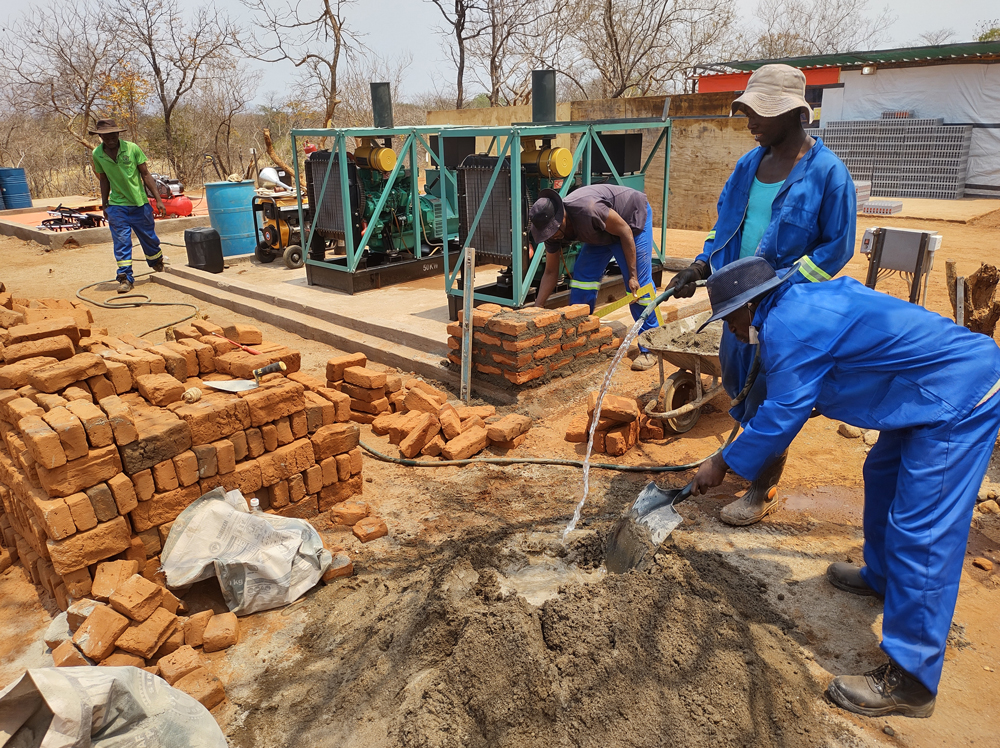
Fig. 3. Polaris supporting local communities in Zimbabwe.
“We’ve improved kitchens, taught food safety, and ensured that refrigeration systems work,” Mooney explains. “These efforts elevate the whole community’s standard of living.”
Every local worker leaves with a laminated certificate documenting their training and experience—an essential credential for future employment. “We may only be there for a few months,” he notes, “but we strive to ensure the community gains something lasting. The impact can be enormous if you invest the time.”
Polaris also channels funds into small-scale community initiatives, ranging from road construction and school libraries to sustainable fish farms that continue to serve communities long after their seismic teams have departed.
Mooney feels the industry should better communicate the broader benefits of responsible oil and gas exploration. “People in the West often don’t grasp the reality,” he reflects. “We’ve met women who spend eight to ten hours a day gathering wood for cooking. When I asked a village chief what it would mean if everyone had a propane tank, he could hardly fathom it. Energy transforms lives. Ending energy poverty is a cause we all should champion.”
STRYDE’s technology not only bolsters Polaris’s operational goals but also aligns with its environmental commitments. “We were among the first to introduce a low-impact seismic crew into Africa. We appreciate projects where, a year later, you can hardly tell we were ever there. STRYDE makes that achievable.”
SCALING THE MODEL FOR FUTURE SURVEYS
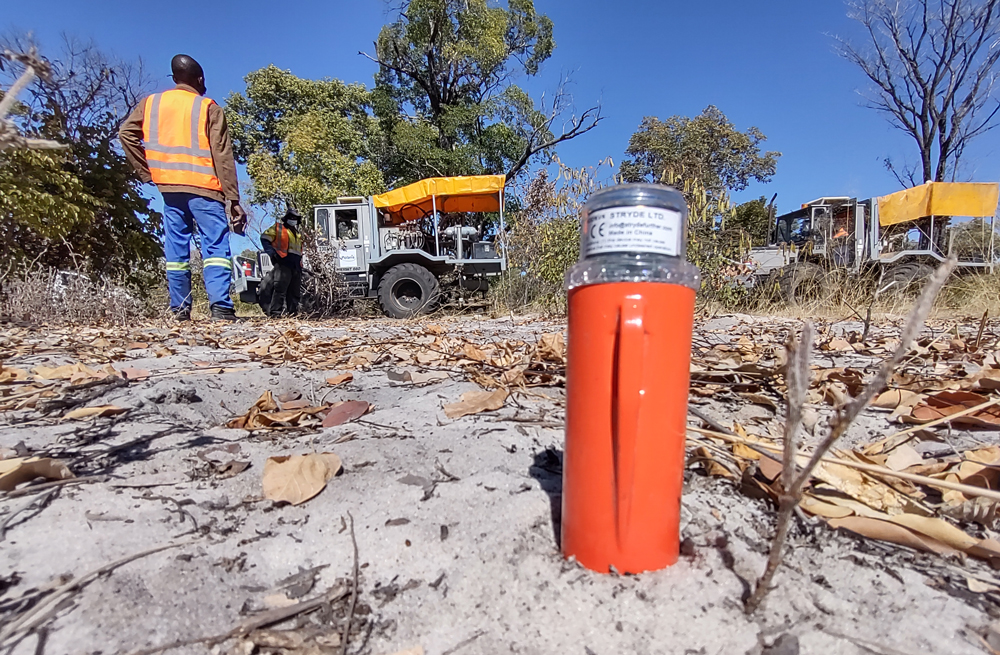
Fig. 4. STRYDE deployment in Namibia.
The collaboration between Polaris and STRYDE has been rooted in cooperation and responsiveness, something Mooney holds in high regard. “Everything we’ve accomplished with STRYDE has been overwhelmingly positive,” he acknowledges. “When we faced integration challenges early on, their team was on-site immediately, working tirelessly. Such support fosters real trust.”
Today, STRYDE’s nodal system is integral to Polaris’ operations across Africa, Pakistan, and beyond, enabling the company to tackle complex projects with smaller teams, less equipment, and increased flexibility.
“It provides us with every option,” states Mooney succinctly. “We can deliver high-quality data, lessen our environmental footprint, and support the communities we engage with. That embodies success for Polaris.”
As the company ventures into new markets, including mineral exploration and shallow subsurface imaging through its subsidiary, Earth Scan Technologies, Mooney envisions STRYDE as a pivotal asset for future operations. “Our goal is simple: to keep doing outstanding work in remarkable locations alongside exceptional people. STRYDE fits seamlessly into that vision.”
Related Articles
FROM THE ARCHIVE