
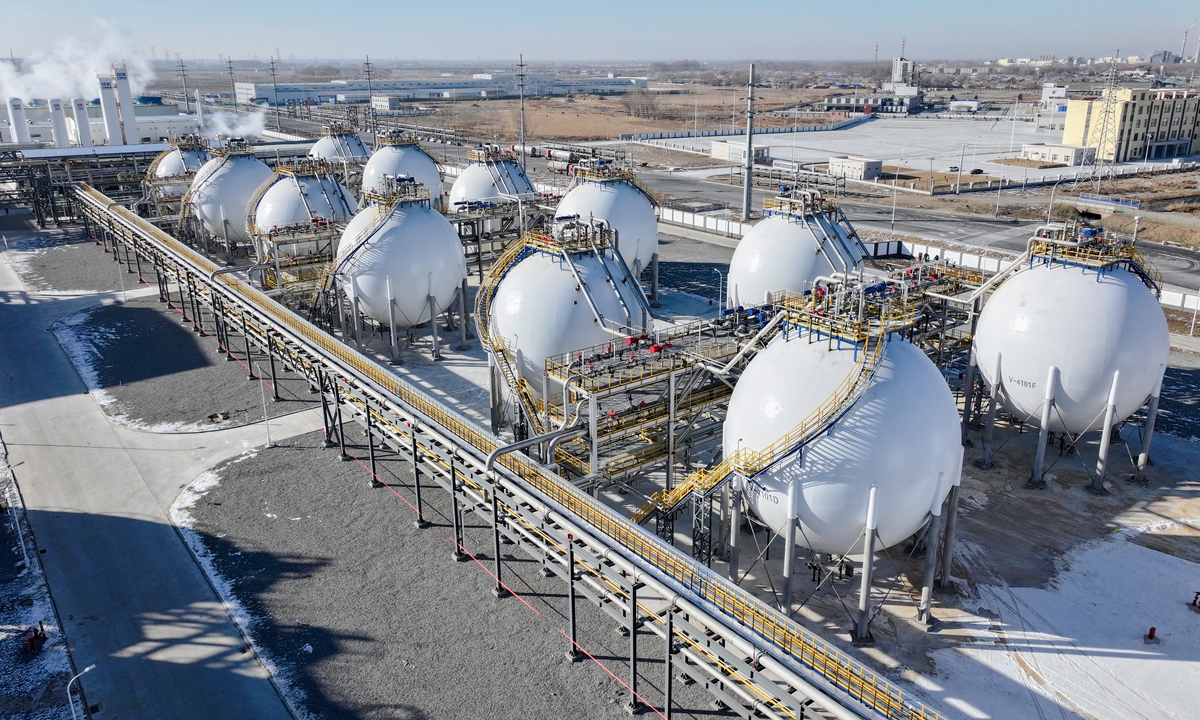
The world’s largest integrated green hydrogen-ammonia-methanol project officially enters operations in Songyuan, Northeast China’s Jilin Province, on December 16, 2025. Photo: Courtesy of China Energy Green Hydrogen Ammonia New Energy (Songyuan) Co.
### A Groundbreaking Initiative in the Heart of China
On December 16, 2025, the world watched as the largest integrated green hydrogen-ammonia-methanol project officially opened its doors in Songyuan, located in Northeast China’s Jilin Province. This monumental step symbolizes a leap forward in China’s capability to harness renewable energy, combining it with innovative chemical production methods. According to a Chinese expert, this launch represents a significant breakthrough and sets the stage for global advancements in the commercialization of green hydrogen.
### Project Overview: A Vision of Sustainability
The project, known as the China Energy Engineering Group Songyuan Hydrogen Energy Industrial Park Phase I, has been fostered by the investment arm of China Energy Engineering Corp (Energy China). With ambitious goals, it aims for an annual production of 45,000 tons of green hydrogen, along with 200,000 tons of green ammonia and methanol. What’s remarkable is its comprehensive model, covering every stage of production from renewable power generation to hydrogen storage and even to hydrogen-based chemical manufacturing.
### Unmatched Capacity and Innovation
One of the features that sets the Songyuan project apart is its extensive production capacity. Upon completion, its Phase I alone will yield a staggering 200,000 tons of green ammonia and methanol, exceeding similar projects worldwide. Additionally, it boasts the title of the largest ground-based hydrogen storage initiative globally, designed to meet the daily cooking needs of approximately 600,000 people.
### Certification and Commercialization Milestones
After its launch, the project proudly received the ISCC EU green certification, which underscores its environmentally friendly operations. In an unprecedented move, the project has also secured the world’s first contract for the sale of green ammonia as an ocean-going shipping fuel. This achievement marks a significant shift towards large-scale commercial application for China’s hydrogen industry, which has been transitioning from pilot programs to operational frameworks.
### Local Resources and Strategic Planning
The strategic decision to establish the Songyuan project wasn’t made lightly. Various factors were taken into account, such as the area’s abundant wind and solar resources, favorable construction costs, ample water supply, and existing chemical parks and transportation networks. Supportive local policies further enhance the attractiveness of this location.
### Efficient Renewable Energy Use
Experts, including Lin Boqiang from the China Center for Energy Economics Research at Xiamen University, praise this development for optimizing renewable energy use. China’s rapid expansion in wind and solar energy—now exceeding a combined capacity of 1.7 billion kilowatts—creates an urgent demand for effective energy absorption methodologies. The introduction of hydrogen energy is seen as a viable solution, helping to create a sustainable energy ecosystem.
### A Growing Leader in Global Hydrogen Initiatives
In recent years, China’s hydrogen sector has experienced explosive growth, leading the world in capacity building and related technologies. By the end of 2024, renewable energy-based hydrogen projects worldwide had surpassed 250,000 tons annually, with China contributing over half of this figure. This positioning serves as a testament to China’s commitment to fostering a robust hydrogen economy.
### Government Support and Future Directions
The acknowledgement of hydrogen power in China’s 15th Five-Year Plan (2026-30) further solidifies governmental backing for the industry’s development. This strategy paves the way for continued investments and innovations in renewable hydrogen projects and related sectors, laying the groundwork for a sustainable energy future.