
Cutting Energy Bills and Supporting Australia’s Clean Energy Transition
Introduction: A New Perspective on Energy Costs
It’s a common belief that reducing emissions will inevitably lead to higher energy bills for Australian households and businesses. However, a groundbreaking report challenges this narrative, revealing significant opportunities to cut energy costs while advancing the country’s commitment to a cleaner, sustainable energy future.
The Report: Highlighting Opportunities
Entitled Improving Energy Affordability Aligns with Net Zero, the recent briefing note from the Institute for Energy Economics and Financial Analysis (IEEFA) sheds light on strategies that can lower electricity and gas costs. Amandine Denis-Ryan, the report’s lead author and CEO of IEEFA Australia, emphasizes that reducing bills and emissions can coexist harmoniously. She states, “Our analysis shows that the cheapest energy future is also a clean one.”
Renewable Energy: The Cost-Effective Choice
One key takeaway from the report is that rising electricity costs are not driven by renewable energy sources. Instead, ageing coal plants and high gas prices are primarily to blame. According to Denis-Ryan, the focus should shift to enhancing energy market efficiency and increasing competition. “Renewables backed by storage and transmission are the lowest-cost form of new electricity generation,” she explains, adding that these technologies will only become cheaper as we move toward 2030.
Addressing Ageing Infrastructure
Australia’s coal fleet is on the brink of significant transition, with many plants expected to retire within the next decade. As these energy assets reach the end of their life cycles, selecting the right replacement technologies becomes crucial. The IEEFA report highlights the urgent need to deploy renewables and storage systems efficiently to avoid becoming overly reliant on expensive gas and coal.
Gas Supply and the Market Dynamics
The landscape of gas supply in Australia is shifting. The low-cost gas fields that traditionally served the market are depleting, while new gas fields come with hefty production and transport costs. IEEFA suggests redirecting uncontracted LNG from exports to domestic consumers as a cost-effective solution for maintaining gas supply. Furthermore, addressing regulatory weaknesses that allow for excessive profits within electricity and gas networks could yield significant savings for consumers.
Demand-Side Measures: Unlocking Potential Savings
Demand-side initiatives offer some of the biggest opportunities for cutting energy bills. The report outlines several strategies, including:
- Energy Efficiency Upgrades: Replacing inefficient heating and hot water systems with modern electric options could save Australian households up to $3.4 billion annually.
- Shifting to Efficient Appliances: Using efficient electric appliances and installing solar and battery systems can slash household net energy bills by as much as 67%.
- Rooftop Solar and Smart Management: Incorporating rooftop solar panels, batteries, and smarter demand management practices can prevent billions in unnecessary generation and network costs.
- Industrial Solutions: There is substantial, yet largely untapped, potential for energy efficiency and electrification in the industrial sector, promising short payback periods and significant cost savings.
Visualizing the Impact
The IEEFA report provides a compelling visual representation that highlights the potential savings for Australian households making the switch to efficient electric appliances, solar energy, and batteries. This visual data underscores the financial viability of transitioning to cleaner energy solutions.
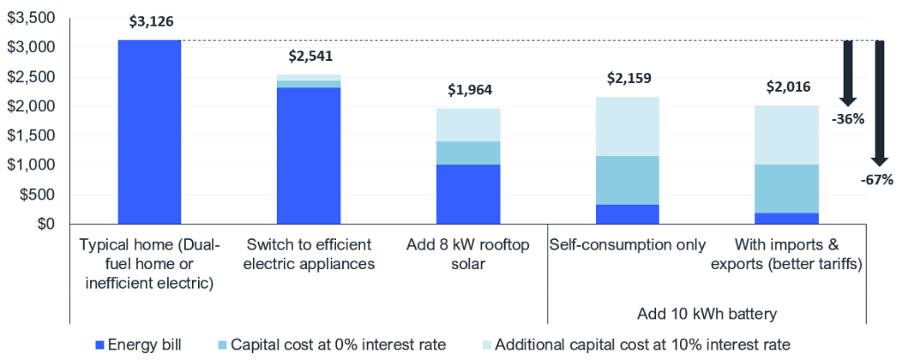
(Source: IEEFA, weighted average across major capital cities, including government rebates.)
Regulatory Reforms: Improving Market Efficiency
To truly capitalize on these opportunities, reforming energy market regulations must be a high priority. Addressing issues like systemic supernormal profits within the electricity and gas networks can lead to significant consumer savings. Enhancing market transparency and improving competition in gas and electricity sectors are essential steps in driving down costs for Australian households and businesses.
Call to Action
As Australia grapples with the pressing need for affordable energy, this report serves as a vital roadmap for aligning economic interests with environmental commitments. With the right strategies and regulatory improvements, the country stands at a pivotal moment to transition to a cleaner and more affordable energy system for all. For those keen on exploring these insights further, the full report is available here.