
By Forrest Secosky
From the December 2025 Issue
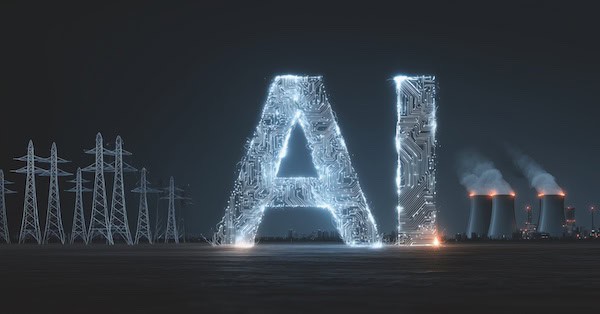
The advancing AI era brings a surge in new energy demands that show no signs of stopping. This shift presents unique opportunities and challenges for data center operators, who are tasked with balancing the evolving needs of AI alongside other critical business priorities, such as resiliency and sustainability.
Many data centers are exploring the integration of new energy resources to help meet these demands, including renewables, as they reimagine their power management strategies. Fortunately, advancements in physical and digital power management technology are creating opportunities for organizations to transform their approach and address emerging challenges.
Power Requirements On The Rise
To understand the opportunity for data centers with the expansion of AI, it is helpful to break down some of the associated power dynamics. Research from the University of Washington indicates that training a single AI model can use up to 10 gigawatt hours—approximately the same amount of electricity consumed by 1,000 homes in the U.S. over a year.
This significant energy demand poses a challenge for data center managers, as the energy needed to power a GPU (~700 W) is nearly three times that of a standard CPU (~250 W). Given that GPUs are typically grouped in clusters, this substantial power draw greatly impacts rack density, potentially demanding up to 10 kW per server and 80-100 kW per rack compared to the 5-10 kW per rack of traditional CPU servers.
As data centers expand computing infrastructure to meet these rising power requirements and deploy new equipment to support larger, heavier AI servers, many operators are realizing that their existing energy grid may not be capable of sustaining their growing energy needs. Additionally, data centers must prepare for more frequent outages and disturbances, as grid reliability may be compromised by escalating demand.
In response to this trend, data centers are becoming more reliant on uninterruptible power supplies (UPSs) and battery energy storage technology that can deliver higher power density from a smaller footprint as space becomes more limited. A range of new solutions available for UPSs and other power management tools can help data center and IT managers enhance their strategies and adapt to AI’s growing energy demands.

Innovation Answers Demand
As data center managers explore potential upgrades for their UPS systems, deploying devices with lithium-ion battery technology can help extend service life and offer higher power density in a smaller footprint—reserving room for new infrastructure to better support AI. Compared to traditional lead-acid (VRLA) batteries, lithium-ion batteries provide longer battery life and faster recharge capabilities.
An additional key advantage of lithium-ion batteries, especially as sustainability demands rise, is their inherent energy storage capabilities. When combined with intelligent energy management, data analytics, and sophisticated controls, a traditionally dormant UPS can be transformed into a distributed energy resource (DER), enabling a bi-directional flow of energy to and from the grid. This approach enables data centers to more efficiently and effectively coordinate multiple energy sources, anticipate energy needs, and participate in grid programs to earn new revenue streams. Utilizing this approach with technologies like grid-interactive UPSs and battery energy storage systems (BESS) can help curtail peak power draw from the utility, reducing costly demand charges and advancing sustainability goals.
Data centers that leverage UPSs as DERs can also provide stabilization services for utilities aiming to increase the resiliency and sustainability of the grid. Some utilities, such as PJM, have begun piloting initiatives with companies to support DER integration and participation in grid services. Thus, data center managers should explore potential opportunities within their respective areas and consider how such innovations could align with their objectives.
Deploying full-scale microgrids is another promising strategy to enhance energy resilience, reduce grid dependence, advance islanding capabilities, and optimize energy usage. Microgrids are self-sustaining electrical power systems that integrate electrical loads and two or more generating assets, allowing them to operate independently from the grid. They can also serve as a reliable backup in the event of an unexpected power outage by balancing fluctuations in energy demand and consumption. By leveraging microgrid technology, data centers can better support the integration of renewable energy sources like solar and battery energy storage, further reducing energy costs and boosting resiliency.
It is crucial to assess each data center’s specific application needs to determine the right approach, as microgrids are not a one-size-fits-all solution. As AI-driven energy demands and the broader energy transition continue to grow, microgrids are set to become a vital technology for supporting AI use cases. Now is the time for data centers to familiarize themselves with these emerging solutions.
Leveraging Digital Technology
While the digital transformation of the data center began well before the AI era, the adoption of digital tools will only accelerate as industry professionals seek to optimize performance, resiliency, and sustainability in response to the growing complexity of AI infrastructure. According to a report commissioned by Eaton, “The evolution of digital transformation,” nearly half of all respondents said they are actively executing a digital strategy, and 50% are in the consideration stage.
Digital resources provide insight into energy consumption both within a centralized data center and across distributed infrastructure to help better understand and manage power needs. Using a converged software platform, data center managers can leverage asset management, IT and OT device monitoring, power quality metrics, and advanced electrical supervision in a single application. This enables better oversight of critical assets, both on-premise and off-site, gaining insights into device health, energy consumption, and asset lifecycle, among other key data points.
These software solutions can also help teams effectively monitor and manage technology assets and critical infrastructure. They also allow industry professionals to leverage tools needed for today’s challenges, such as power availability issues, while laying a foundation to add new functionality as needs evolve.
With the right investments in intelligent power management tools, data centers can unlock a full view of assets within the data center environment, leveraging sophisticated controls and analytics that enable facility executives to make smarter decisions around energy usage in the AI era.
Charting A Course For AI’s Advancement
AI is driving a swift increase in energy demands for data centers, which calls for new approaches to power management. Major objectives for performance reliability and sustainability cannot be lost in the shuffle as the transition continues to take shape. By strategically leveraging intelligent power management technologies, such as grid-interactive UPSs and digital power management tools, data centers will ensure they are in a position to balance key priorities and accommodate the next stage of advancement.

Secosky is the commercial marketing manager for Data Centers at Eaton in Raleigh, North Carolina. Before this role, he was the strategic lead for Modular Solutions, including substations, data centers, power assemblies, and nova reclosers.
Do you have a comment? Share your thoughts by sending an e-mail to the Editor at [email protected].