
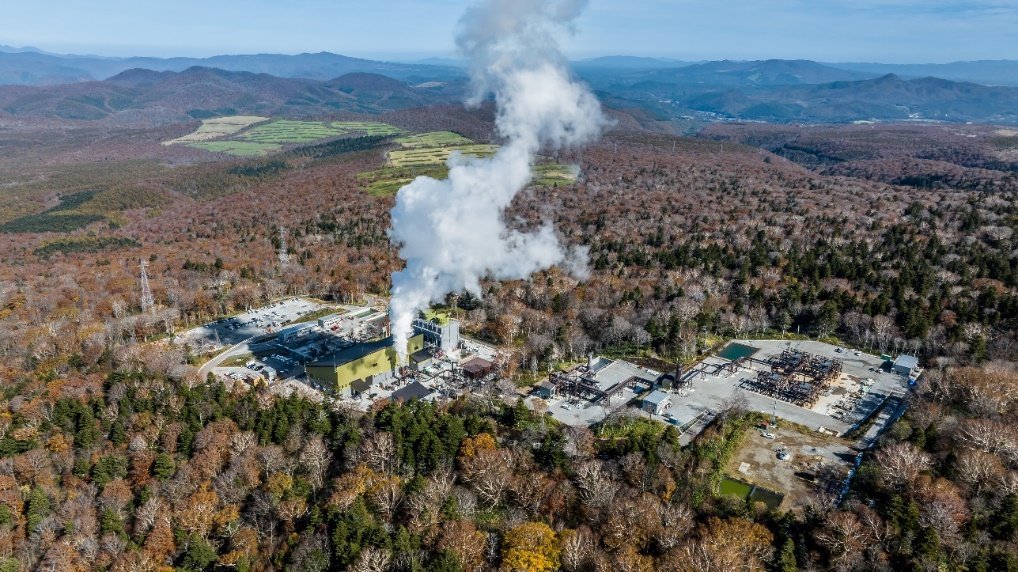
The Appi Geothermal Power Plant in Hachimantai National Forest, Hachimantai-city, Iwate, Japan (source: Mitsubishi Materials Corporation)
The Japanese Government is planning to introduce measures to support geothermal power development, targeting a 1% share in the country’s power mix by 2030.
The Ministry of Economy, Trade, and Industry (METI) of Japan is taking significant steps to enhance the country’s renewable energy landscape by focusing on geothermal power development. The government is aiming to introduce new support measures that will specifically benefit small and medium-sized geothermal projects, alongside hydroelectric power initiatives.
This initiative aligns with the broader strategy of linking renewable energy advancements to regional revitalization efforts, a key priority under the cabinet of Prime Minister Shigeru Ishiba. By fostering local engagement and ensuring that renewable energy projects contribute to community revitalization, METI hopes to create a sustainable energy framework that benefits both the environment and local economies.
A notable aspect of these proposed measures is the emphasis on establishing collaborative agreements. The Japanese government plans to facilitate agreements among local administrative agencies, power companies, and residents, addressing historically entrenched issues such as long development cycles and local resistance to geothermal projects. This inclusive approach could prove crucial in building community support and expediting project timelines.
By incorporating these support measures into Japan’s medium-term energy policy guidelines, set to be drafted by the end of 2024, the government aims to provide a structured and flexible framework for the growth of geothermal energy. The plan envisions boosting Japan’s relatively limited geothermal capacity, which currently stands at 576 MW as of the end of 2023. This capacity places Japan 10th globally, accounting for less than 1% of the nation’s total power generation capacity.
Despite its wealth of geothermal resources, Japan’s utilization remains far below potential. The government is optimistic that these newly outlined measures can elevate geothermal power to represent 1% of the national power mix by 2030, bolstering its overall renewable energy goals alongside a target for hydroelectric power to reach 11%.
To better understand the implications of these developments, it’s essential to consider the strategic goals behind the push for renewable energy. The collaboration between government, local authorities, and communities could herald a new era for energy independence and sustainability in Japan, paving the way for innovative projects and climate resilience.
For further reading, primary sources can be accessed through NHK News and KNews.