

When blackouts hit Houston last February, Rob and Robin Dickehuth’s home became a beacon of light amid the chaos, thanks to a $35,000 solar and battery system that ensured their house stayed illuminated while others languished in darkness. “We were pretty much the only home on the block with light,” Rob remarked, reflecting on the desperate circumstances that led many in Texas to reconsider their reliance on the conventional power grid. “I think this was a hard lesson for a lot of people in Texas,” he added, hinting at the fundamental changes in energy thinking that emerged as a result.
The crisis, which left millions without power, heat, and water for days, triggered a significant uptick in demand for backup electricity systems. Freedom Solar, a company specializing in home solar and storage solutions, saw sales of Tesla Powerwall batteries rise an astonishing 16-fold. Greater Texas Solar reported a sharp 25% surge in sales following the freeze. Consumers’ newfound interest in these backup systems underscores a pivotal shift in energy priorities across the Lone Star State—one that increasingly favors self-sufficiency over traditional grid reliance.
“During the freeze, people lost faith in the grid and they lost faith in low electricity prices,” explained Bret Biggart, CEO of Freedom Solar. This loss of confidence prompted many Texans to seek ways to hedge against future uncertainty by investing in solar and battery technology. In a state traditionally dominated by fossil fuels, the rising popularity of renewables signals an intriguing evolution in attitudes toward energy sources.
The conversation surrounding energy in Texas remains complex, especially given the political landscape. Though lawmakers were quick to blame the blackouts on renewable energy’s intermittency, it became increasingly clear that shuttered gas plants and fuel shortages were pivotal contributors to the outages. As a result, many consumers looking to safeguard their homes against future crises have adopted a decidedly pragmatic approach to energy solutions, often sidelining the political rhetoric surrounding renewable resources.
“It speaks to the fact that people don’t have confidence in the state,” said Adrian Shelley, director of Public Citizen’s Texas office. “That’s a very Texan way of looking at the problem – I’m going to build my own grid.” This sentiment reflects a larger trend of individual empowerment and autonomy in the face of systemic failures, encouraging homeowners to take control of their energy futures.
In this quest for independence, companies like Greater Texas Solar have capitalized by providing innovative solar and battery storage systems complemented with propane-fired generators, a uniquely Texan solution to energy resilience. Such systems allow users to harness electricity generated by propane generators to effectively recharge their battery systems during outages. Co-owner Bill Skinner emphasized that this integration enables customers to operate in “island mode,” maintaining power for extended periods as needed.
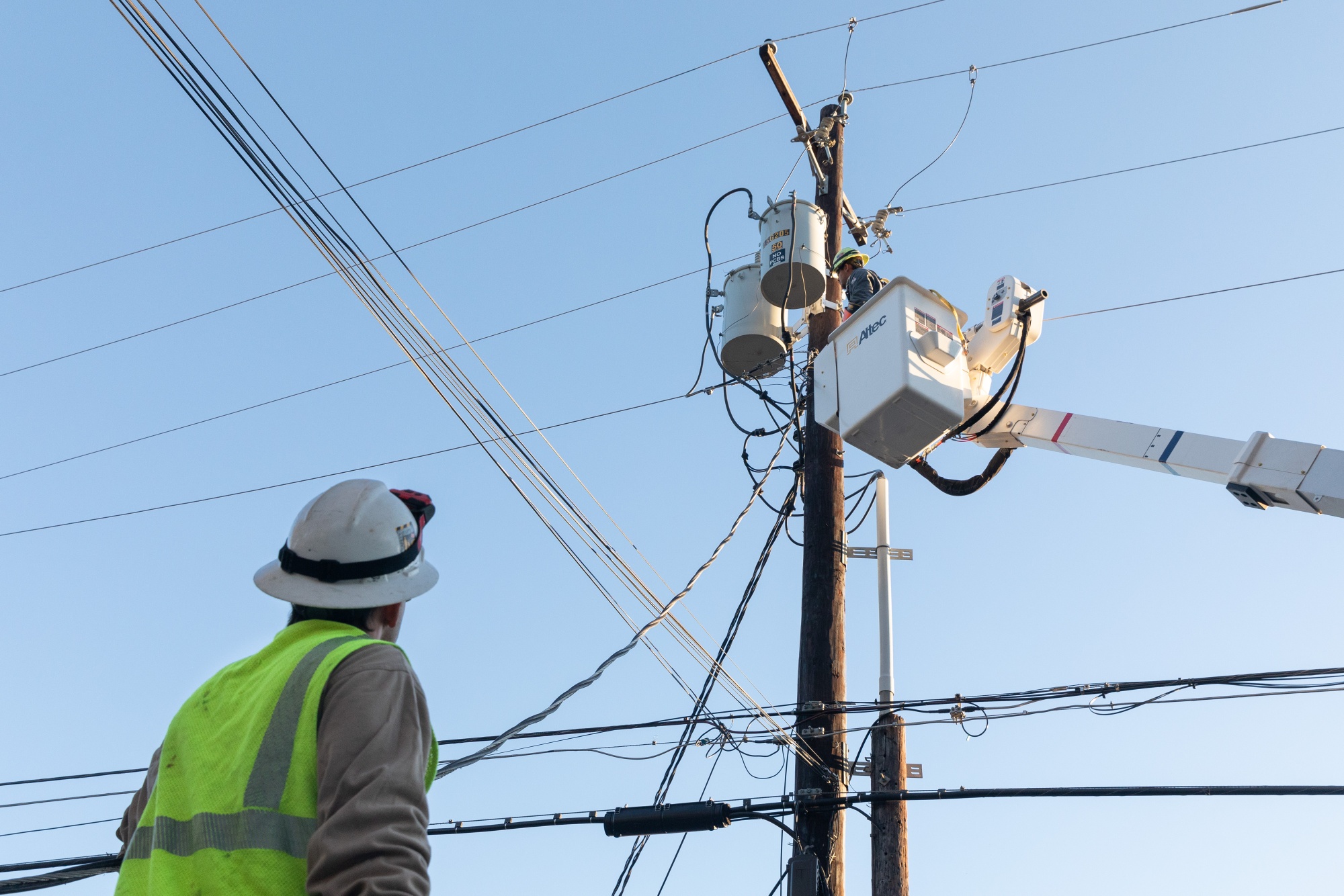
A worker repairs a power line in Austin on Feb. 20.
Photographer: Thomas Ryan Allison/Bloomberg
The trend towards hybrid power solutions isn’t limited to solar and batteries; natural gas remains a key player in the evolving energy landscape. Enchanted Rock, a provider of gas-fired microgrid systems, experienced a remarkable 300% increase in inquiries post-crisis. While their systems have typically been employed during severe weather events, they proved resilient during the February freeze, ensuring continued operation for over 140 clients.
Across the country, investments in backup power systems have become a common reaction to catastrophic events. Homeowners impacted by wildfires in California have turned to renewable energy systems, while those affected by Hurricane Sandy in the Northeast rushed to acquire diesel generators. Such movements raise crucial questions about equity, as the high costs associated with these backup systems may widen existing disparities without addressing overarching concerns about grid reliability.
Consumer advocates highlight the need for solutions that prioritize community resilience, calling for strategic investments in public microgrids located at essential facilities like police stations, fire stations, and schools. These community hubs can serve as vital shelters during prolonged outages, fostering solidarity and security during crises.
Meanwhile, as more homeowners and businesses transition to locally-sited energy resources, utility companies may face significant challenges. Jared Leader, SEPA’s senior manager of research and industry strategy, noted that electric distribution lines—often designed for one-way flows—may require upgrades to accommodate growing demand from decentralized power sources. “Utilities will need to enhance demand-and supply-side planning as more homeowners and businesses go out and purchase more locally-sited resources,” he explained, emphasizing the evolving dynamics facing energy providers as the landscape shifts.