
Distributed energy resources are advancing the cause of a more resilient and reliable power supply for utilities, homes and businesses, and more.
Distributed energy resources (DERs) play an increasingly crucial role in modern power generation. Emerging as a pivotal component in the shift toward a more reliable and resilient power grid, these resources include a variety of generation technologies—ranging from traditional fossil fuels to innovative renewable sources like solar and wind. The deployment of smaller-scale installations has become essential for optimizing demand response and enhancing energy efficiency.

1. Wind turbines and rooftop solar arrays can provide on-site power generation for commercial and industrial enterprises, lowering energy costs for businesses. Source: Envato Elements
Utilities and independent power producers recognize that DERs can alleviate pressure during peak load times. By doing so, they significantly diminish the likelihood of brownouts and blackouts. Microgrids, which blend multiple DERs into a cohesive system, are emerging as vital solutions in enhancing grid reliability. These systems can either operate independently or complement existing grids, especially in areas designated for critical infrastructure, making them indispensable during energy crises.
Furthermore, the localized power generation provided by DERs can lead to substantial cost savings for consumers. As energy prices continue to be a hot topic, the move toward generating power closer to where it is consumed is proving invaluable.
Industry experts have identified several key reasons for the growing importance of DERs:
- Backup Power: DERs ensure operational continuity during outages, empowering homes, businesses, and critical services even when the main grid is compromised.
- Microgrids: These integrated networks can function autonomously from the primary grid, enhancing reliability for neighborhoods or larger commercial entities.
- Reduced Transmission Losses: Generating electricity nearer to its point of consumption minimizes energy loss associated with long-distance transmission lines, optimizing efficiency.
- Lower Costs: By decreasing reliance on utility-production, DERs effectively lower energy bills. They also allow optimized energy use, enabling storage systems to reserve energy when prices are low for later use during high-demand periods.
- Revenue Opportunities: Consumers can sell unused power back to the grid or participate in systems like virtual power plants (VPPs), enabling additional income streams.
- Reduced Infrastructure Costs: By integrating DERs, utilities can defer costly upgrades to their existing infrastructure.
Hal Corin, director of Development at Viridi, a battery storage provider, emphasizes the financial benefits of DERs for utilities. “Demand response benefits utilities by avoiding the use of costly peaker plants. They can effectively maintain the same regulated returns while lowering operational costs,” he explains. This suggests that the integration of DERs can create a win-win situation for both consumers and producers.
Ken Irvin from Sidley Austin sheds light on the transformative potential of DERs. “These resources can support peak shaving and improve overall reliability,” he argues. As utilities begin to view demand as a dynamic entity rather than a fixed one, programs like VPPs and DSM (demand-side management) will be essential in shaping the future of the energy landscape.
Microgrids and Energy Storage
Microgrids are a cornerstone of DER deployment, providing real-time monitoring and responsiveness to grid disturbances. Energy storage solutions integrated into microgrids enhance grid resilience and overall performance. A prime example is the four microgrids launched by San Diego Gas & Electric in California, which bolster reliability for schools, fire stations, and other essential services.
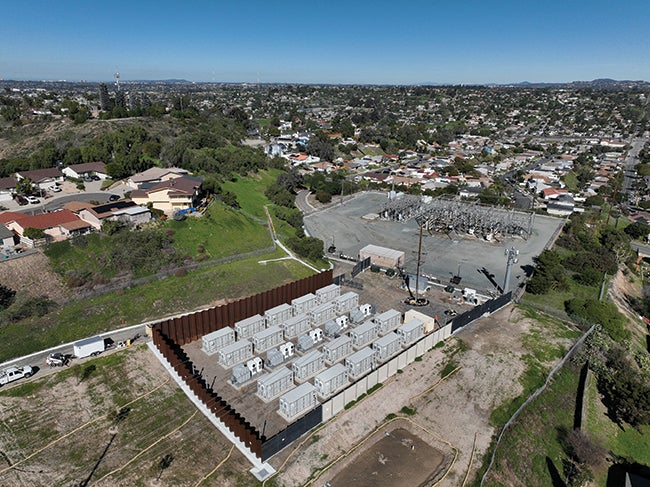
2. The Paradise microgrid in California is one of four installations built by San Diego Gas & Electric (SDG&E) to enhance grid reliability. It operates independently from the larger regional grid. Courtesy: SDG&E
Sally Jacquemin, vice president of AspenTech Digital Grid Management, anticipates a future where microgrids not only manage traditional energy loads but also optimize multiple on-site generation sources. “From advanced load management to coordination with regional utilities, microgrids are evolving into essential tools for grid reliability,” she notes.
The energy sector remains in the early stages of harnessing the full potential of battery energy storage systems (BESS). Major projections indicate that the global market for BESS could exceed $120 billion by 2030, significantly impacting the renewable energy landscape.
Corin points out that the solar energy sector stands to gain immensely from energy storage developments. As battery storage technology evolves, it makes intermittent power sources like solar more viable for integration into ongoing operations within power grids.
Advanced Technologies Supporting Adoption
In addition to physical infrastructures, advanced technologies such as smart thermostats and electric water heaters are key enablers for DER adoption. These tools help individuals manage energy consumption based on grid conditions or market-driven price signals. Moreover, the advent of electric vehicles (EVs) has introduced novel opportunities for energy exchange with the grid via vehicle-to-grid (V2G) technology.
Terence Healey points out the potential of V2G technologies, which turn EVs into mobile distributed energy resources. These electrically powered vehicles can assist the grid by discharging stored energy during times of peak demand. “Imagine a school bus acting as a large battery on wheels. This technology holds exciting promise,” he states.
As the energy landscape shifts towards greater reliance on localized and distributed energy sources, the deployment of DERs—coupled with advancements in technology—will pave the way for a more sustainable, reliable, and economically viable power supply.