
China’s Ambitious Carbon Capture, Utilization, and Storage (CCUS) Initiatives
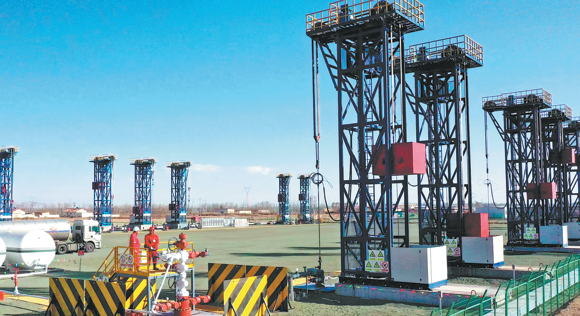
Workers conduct carbon dioxide injection operations at Bayan Oilfield in Bayannuur, Inner Mongolia autonomous region. LI YUNPING/XINHUA
In its relentless pursuit of carbon neutrality by 2060, China is leaning heavily on Carbon Capture, Utilization, and Storage (CCUS) technology. This innovative approach offers a dual benefit: it supports the country’s ongoing economic growth while simultaneously addressing the climate crisis. By effectively capturing the carbon dioxide emitted from fossil fuels and storing it safely underground, CCUS promises to be a game changer in China’s energy landscape.
A Challenge with Coal Dependence
China’s energy sector remains significantly reliant on coal and heavy industries, sectors notoriously challenging to decarbonize. Recognizing this, the government and major state-owned energy companies are ramping up investments in CCUS technologies. This shift is not just about transitioning to greener energy; it’s about making operational changes that allow existing systems to coexist with sustainability goals.
Policy Support and Strategic Integration
The push for CCUS is formal and robust. In its 14th Five-Year Plan (2021-2025), Beijing explicitly incorporates CCUS, viewing it as “crucial” for the large-scale, low-carbon utilization of fossil fuels. The recent updates to the government’s technology roadmap further emphasize CCUS as a vital component in achieving carbon neutrality. This strategic alignment showcases China’s commitment to creating a comprehensive approach to energy transition.
Bridging the Emissions Gap
Industry experts assert that CCUS is indispensable in mitigating greenhouse gas emissions. Lu Junling, chief economist at the National Energy Administration (NEA), articulates that CCUS serves as a crucial bridge between the demands of energy security and the urgent need for carbon reduction. Without effective CCUS deployment, reaching the ambitious 2060 carbon neutrality target seems implausible.
Accelerated Development and Implementation
The NEA is actively promoting the scalability of CCUS projects. Lu emphasizes the necessity for accelerated planning, top-level design, and the initiation of demonstration projects to facilitate a more sustainable, low-carbon future. As of now, the oil and gas industry is set to operate over 90 CCUS projects, with over 10 projects specifically focusing on Enhanced Oil Recovery (EOR)—a method where CO2 injection aids in extracting more oil while simultaneously sequestering carbon.
Expanding Project Scope and Scale
China’s commitment to CCUS is evident in the burgeoning number of projects in development. By the end of 2024, the country is expected to have 126 CCUS projects planned or operational, collectively capable of capturing and injecting an impressive annual volume of carbon dioxide. Leading this charge are major energy corporations like China Petroleum and Chemical Corp (Sinopec), which operates the country’s pioneering million-ton CCUS initiative. This project at the Qilu petrochemical plant successfully captures one million tons of CO2 annually and uses it in EOR processes in the Shengli oilfield.
Benchmarking for Wider Adoption
The Qilu project stands as a benchmark for CCUS engineering excellence, paving the way for broader implementation across the nation. Industry leaders, including Sinopec’s chairman Hou Qijun, stress that expanding the scope of CCUS initiatives not only enhances traditional industries but also cultivates new productive forces in the economy. The integration of CCUS into corporate strategy symbolizes a shift toward more sustainable business practices.
Regional Hubs and Collective Action
In addition to Sinopec’s efforts, the China National Petroleum Corporation is advancing ambitious CCUS hubs in various provinces, such as Heilongjiang and Gansu. These initiatives aim to consolidate emissions from surrounding power and industrial facilities, making them more manageable and reducing their overall environmental impact.
Global Momentum for CCUS
The importance of CCUS isn’t lost on the global stage. Countries around the world are increasingly recognizing its role in the transition toward sustainable energy systems. While a substantial portion of captured CO2 is currently utilized for EOR, there is a noticeable shift toward exploring dedicated geological storage in deep saline aquifers, particularly in coastal regions. This trend underscores a growing international commitment to integrating CCUS into broader climate strategies.
Conclusion
As China embarks on this ambitious journey toward carbon neutrality, its commitment to deploying and scaling CCUS technologies provides tangible hope in the fight against climate change. By marrying economic growth with environmental responsibility, China aims to redefine its energy future, proving that with the right technology and determination, a sustainable world is indeed attainable.